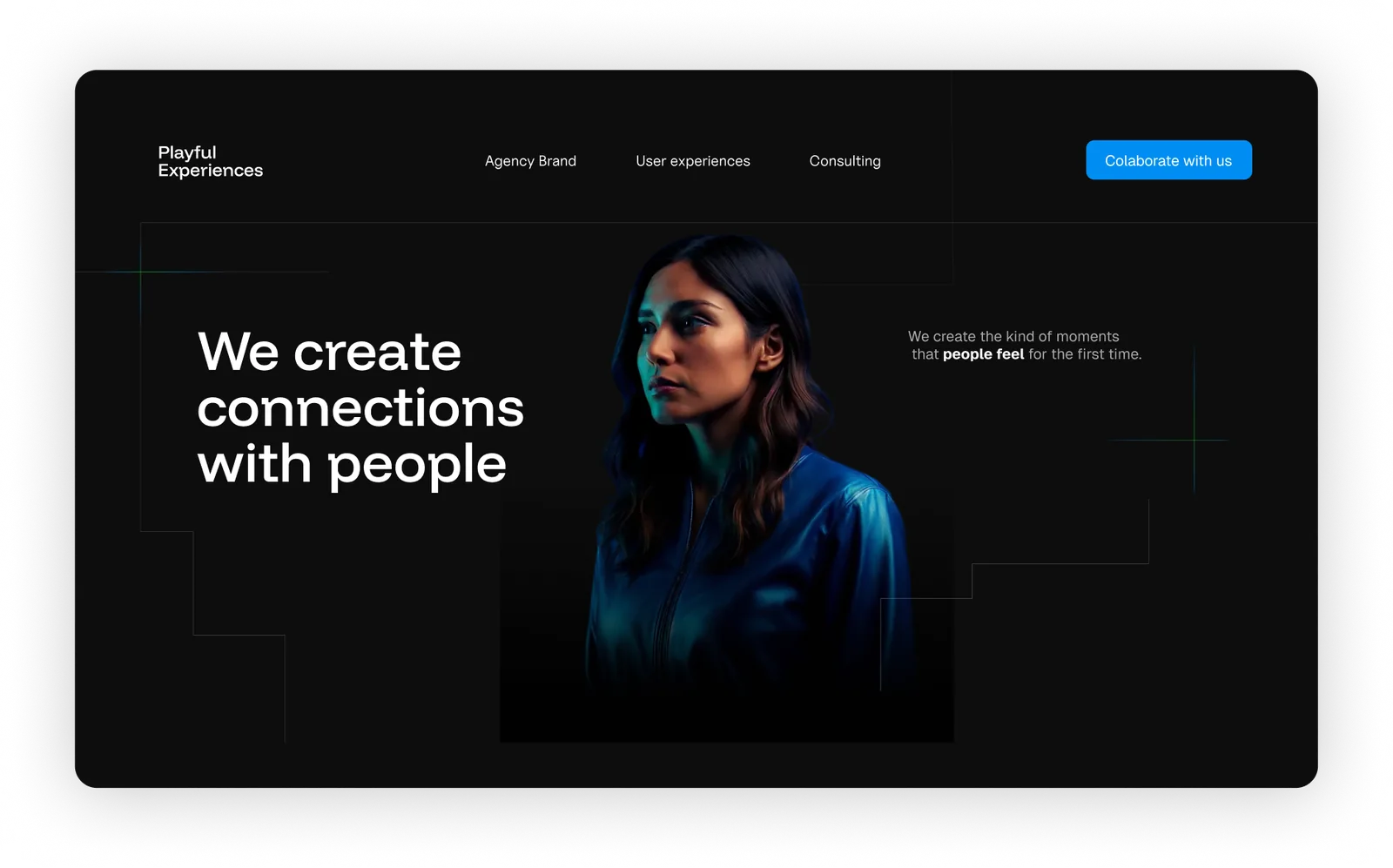
Playful Experiences is a creative agency that combines strategy, technology, and experiences to help SMEs and brands express their identity and connect with their audience.
The problem: the existing site didn't capture that value. The story was dispersed across social media and campaign posts, making conversion difficult. Visitors didn't know what the agency did in the first 30 seconds — and the team spent hours answering the same questions through DMs and calls.
Before any sketch, the founder and I aligned on three goals. Every design decision after that point had to serve at least one of them.
Unify the brand narrative to clearly communicate the agency's value — eliminating the dispersion across social media and the web.
Design a B2B conversion funnel that filters customer needs from the first contact — reducing time spent on unqualified leads.
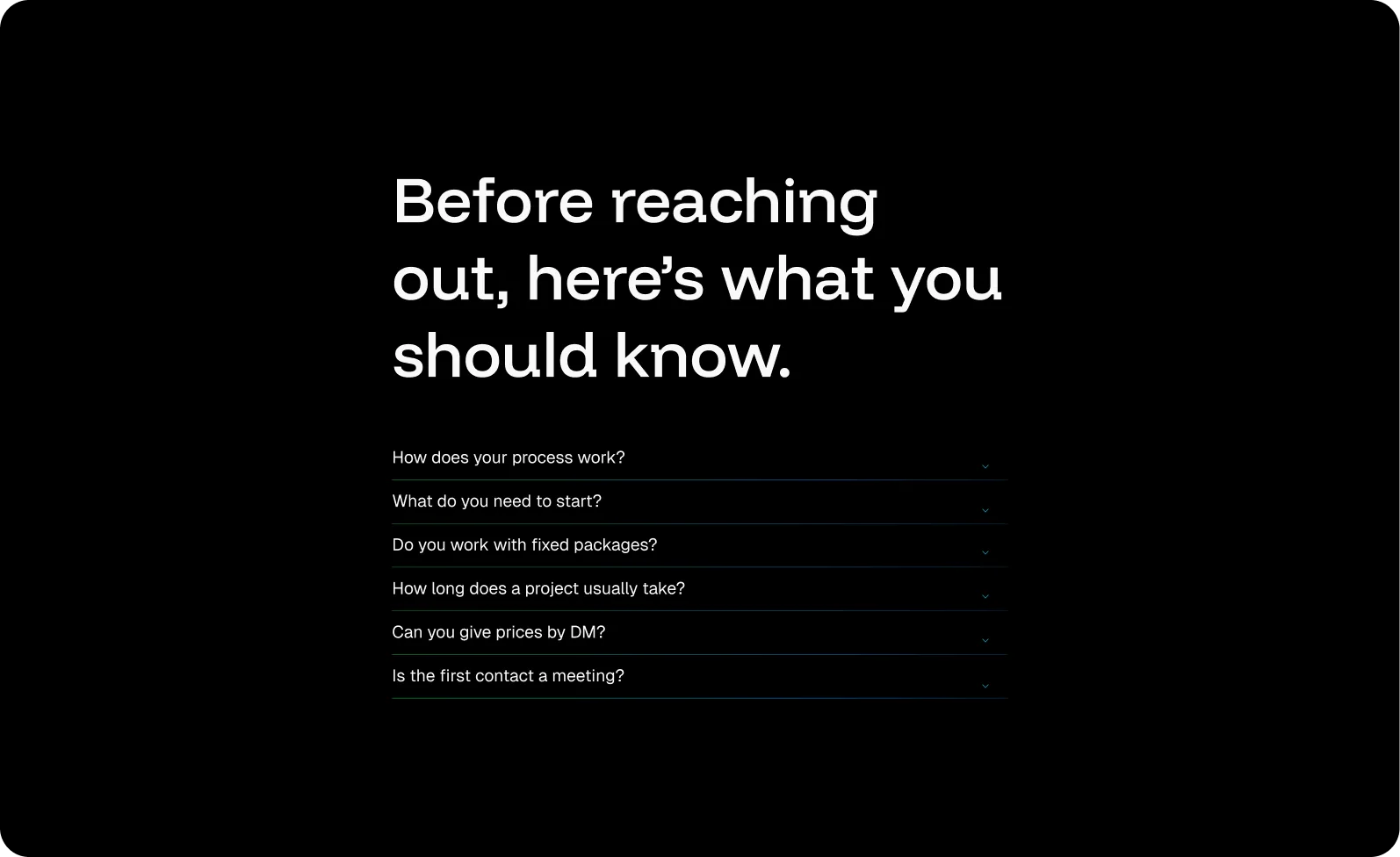
Reduce dependence on DMs and calls through an information architecture that autonomously answers questions about process, timelines, and next steps.
The agency's brand had a mystical tone but lacked clarity. My work had to translate that tone into a scannable narrative, give it structure, and make the site maintainable after handoff.
Interpreted the brand's abstract mission into a clear narrative that could live on the home page without needing a tour guide.
Structured the information architecture, designed the visual interface, and ensured compliance with accessibility standards (WCAG 2.1).
Defined CMS logic and recorded explanatory videos with a user manual so the client could operate the site independently.
I audited the existing channels and benchmarked against agencies doing this well. Three patterns emerged:
High interest on social media, but the website wasn't converting that attention. Visitors scanned, didn't find a clear next step, and left.
The team needed a CMS and editorial guidelines to keep the site updated — otherwise it would go stale within weeks.
Successful agencies use strong visual storytelling, clear before/after examples, social proof, and specific CTAs. The current site had none of these.
The timeline was tight. I worked in two-week sprints with clear "done" criteria for each phase — so the client could see progress without getting stuck in endless revision loops.
Audit of current channels, conversion gaps, and competitor agencies.
IA aligned with the three business goals. Content priorities agreed.
Narrative-first home, diagnostic form flow, and self-service FAQ.
Prototype review with potential clients and the internal team.
Handoff, CMS training videos, and post-launch adjustments based on data.
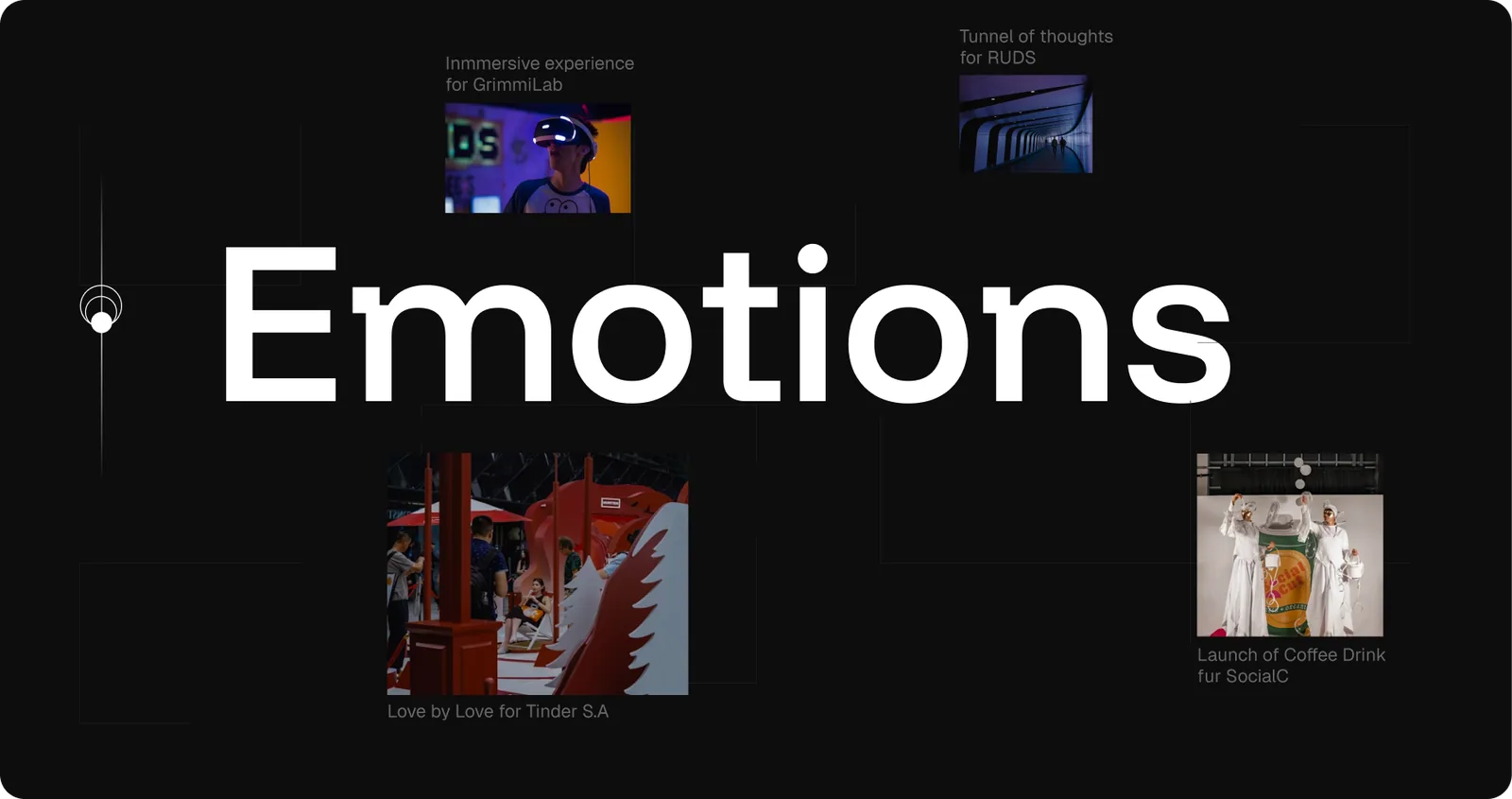
The first section explains what the agency does in one sentence. The second goes deeper into the how. The third is an interactive grid that groups campaigns under the brand's core concepts: Expectation, Activation, Experience. No mystery, no paragraphs. You scan, you understand, you scroll.
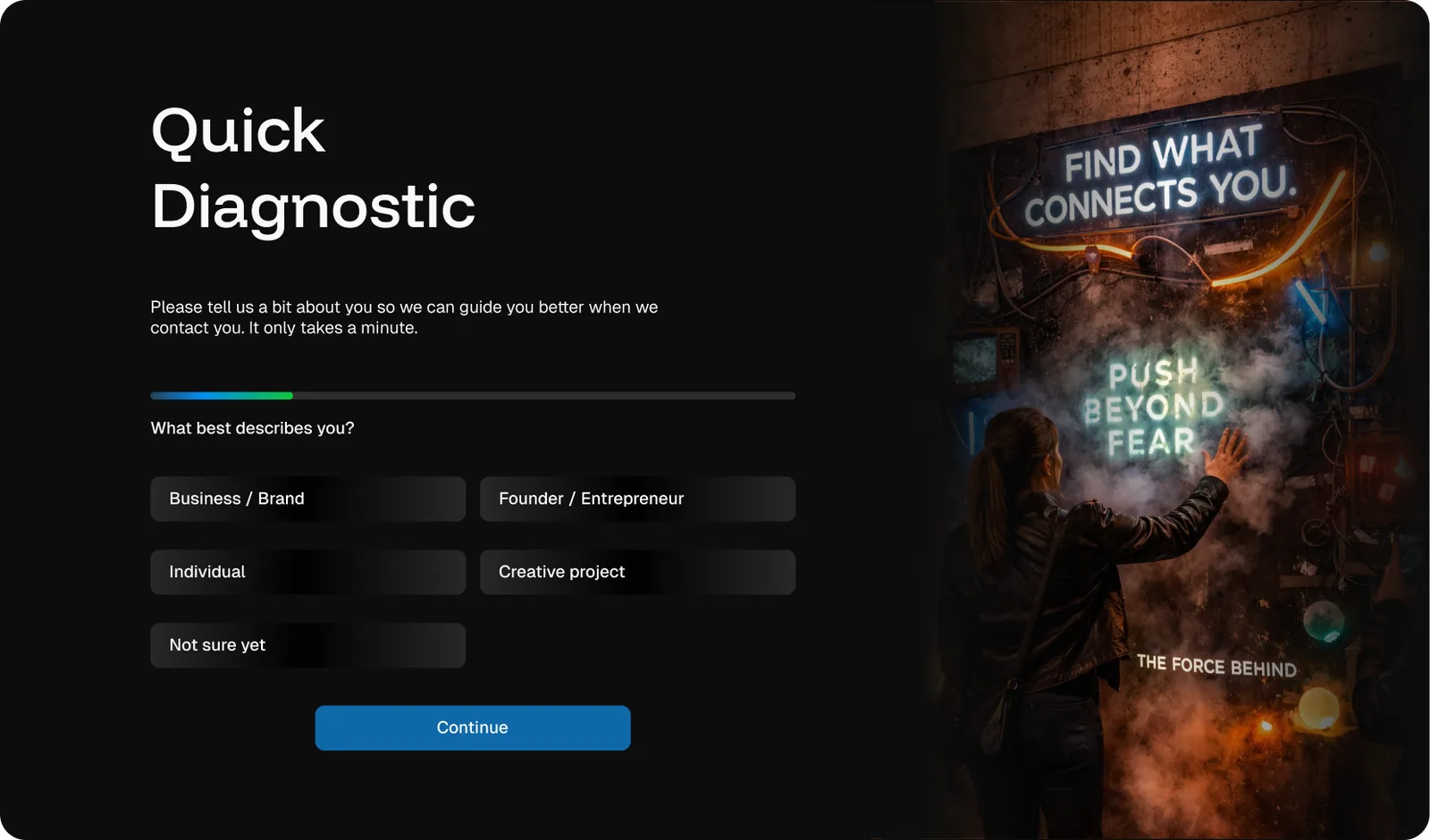
Instead of a generic contact form, users answer a short sequence of questions before submitting: Are you a business, an individual, or a creative project? What's your stage? What do you want to activate?
Yes, it adds friction. But it replaces hours of back-and-forth emails with a single well-scoped inbound. The client gets context. The user gets a more useful response. Both sides win.
I moved the six most-asked DM questions directly into the information architecture — with answers that are honest, not sales copy. The goal was to make the FAQ feel like the team's real voice, because the users who still reached out after reading it were the ones worth talking to.
Numbers measured 90 days after launch, compared to the three months before.
First the story, then the design. Without a clear narrative, a website is just a catalog.
Open to full-time, contract, and freelance roles across Germany and remote in Europe.
angie.varelab7@gmail.com